


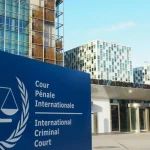
The ICC removed a Prosecutor for misconduct. This December it elects six judges — after its own Advisory Committee reported that it could not complete the moral-character check the Rome Statute requires, and while the report that would complete it sits unseen by the States who vote.
In July 2026 the Assembly of States Parties removed Karim Khan as Prosecutor of the International Criminal Court over sexual misconduct, the first such removal in the Court’s history (discussed on this blog here). The disciplinary process was improvised, novel enough to give him a plausible grievance, but the Assembly reached its own determination and acted, setting down a principle it now has to live by: serious misconduct disqualifies, even at the very top.
Weeks later, the same Assembly’s Advisory Committee on Nominations (Committee) reported on the twelve candidates for the six judgeships to be filled this December. It ranked them on competence. On the one qualification the Khan affair had just made unavoidable, “high moral character,” it reached no conclusion: not for one candidate or some, but for all twelve, in identical terms. The election is proceeding regardless.
That contrast is the whole argument in miniature. The institution that ran a process to its end against the most powerful man in the building left the character check unfinished, one month later, for the twelve seeking six seats on its bench. I do not investigate any of them here, and this is no place to: whether a given candidate would pass such a check is a question for the process to answer, not for me to pre-empt in print. My interest is the institution — you do not run a process to conclusion while the world watches and abandon another once the room empties.
What the report says
Article 36(3)(a) of the Rome Statute requires that judges be persons of “high moral character”. This is a legal qualification, in the same sentence as the requirement of competence in criminal or international law. To verify it, States Parties built a due-diligence procedure meant to surface concerns an interview cannot reach.
This year, the procedure did not run its course. The Committee received a preliminary report from the Independent Oversight Mechanism (IOM), the Court’s internal investigative body, on 11 July 2026. The final report did not arrive before the Committee’s session closed. And so, in its own words, the Committee “could not make a conclusive determination” on each of the candidates’ high moral character (ICC-ASP/25/8, para. 19).
Set against that admission is the sentence now being read out of context. For each candidate, in identical terms, the report pairs the open question with a second clause: the review was ongoing and no conclusive determination could be made, but the Committee’s examination “through the interview” “did not put into question the high moral character of the candidate”. Read the two halves together and the reassurance — that nothing was found against the candidate’s character — collapses. The comforting clause is tied to the interview, a test of a candidate’s command of the Rome Statute. The deciding clause, the misconduct review, was left open. And it is addressed to no one in particular: the same clause — that the interview “did not put into question the high moral character of the candidate” — appears twelve times, a single stamp pressed down the list, regarding each candidate. To read any one of those paragraphs as a personal clearance is to mistake the stamp for a finding.
This is how an institution converts uncertainty into permission. No one lies, and the report clears no one. The gap left by the missing report is papered over with a formula the Committee drew from the interviews, a test of legal competence rather than conduct, and that formula then travels as though it had settled the very question it was drafted to leave open. The Committee’s own words — that it “could not make a conclusive determination” — reach the world as “nothing was found.”
A modest safeguard, delivered incomplete
To its credit, the Committee states its limitation plainly rather than smoothing it over. It records not merely that it could not conclude, but that it was “unable to fully take into account any findings or concerns arising from the report” (Annex III, Rec. 1); the review of misconduct allegations “remained ongoing at the time of the session” (para. 20). A vetting body does not ordinarily minute that it could not act on the check. This one did.
The final report was in fact completed shortly afterwards, at the end of July — after the Committee report had been finalised, too late to inform it. The question is no longer whether the check gets finished but whether its findings reach the people who vote. A completed report that never reaches States before December is, for the election, worth no more than one that never existed.
The vetting’s limits are deliberate. Under the due-diligence procedure (ICC-ASP/22/Res.3, Annex II), the vetting is “intended only to assist” States: a credibility screen feeding an advisory note, “not in any way binding”. Its reach is narrow by design: anonymous allegations are not accepted (Annex II, para. 16), and one that cannot be corroborated without a complainant willing to be named, the ordinary position of anyone with a career to lose, cannot readily be carried forward (Annex II, para. 17). None of that warrants indignation, as a candidate must have the chance to answer, and a complainant must not be exposed against her will. But it is precisely because the instrument does so little that the little it does matters. On the question it was built to inform, its finding is most of what the electors will get. In the absence of the report, States vote with the one document that speaks to a character missing from the table.
Priyanka Chirimar, who represents complainants in the internal justice systems of international organisations, says plainly that the safeguard “overpromised and underdelivered” (interview with the author, 25 August 2026; on file with author). Her point is not that vetting is futile, but that a light instrument demands more care, not less. The IOM — the only dedicated body in the chain — is a small office of investigators lodged inside the Court, sharing the building with the section heads, registry and bench it is meant to scrutinise; across the UN system, only a minority of those harassed take any formal action (Deloitte, 2019). A check that already runs on self-disclosure, through a body its intended users avoid, cannot afford to be weakened further by anything avoidable by arriving late, against the clock, or half-blind.
And beneath the timing lies a mismatch. A reader assumes a vetting process ends in a verdict — the complaints were substantiated, or they were not. This mechanism was never built to reach a verdict in the first place. By design, it is an early-warning screen, a prima facie credibility check with neither the powers nor the remit of an investigation, and what evidentiary standard it should apply to the complaints it receives is nowhere set out. Ask a screen like that to “substantiate” and it will confirm almost nothing — not because concerns were tested and found wanting, but because the mechanism was never equipped to test them. On those terms “high moral character” is less verified than left unexamined; and the same opacity that yields that a result is part of what deters complaints from arriving in the first place. A safeguard that cannot bring a concern to the surface, and could not weigh it if it did, is not a clean bill of character. It is silence mistaken for clearance.
Consistency is the argument
An institution’s integrity is not proven in the case the world is watching, but in the next one, after the cameras leave. Khan was the watched case: eighteen months of scrutiny, a public vote. The judicial election is the unwatched one, a housekeeping matter the press rarely covers once the headline story has closed. That asymmetry is the condition under which corners get cut.
Purna Sen, an institutional sexual-harassment specialist who served as the ICC Prosecutor’s Special Adviser on Working Climate, was asked whether she could name a single case, anywhere in this field, in which a powerful man was removed or kept out for sexual misconduct alone, with no other institutional or political reason operating alongside it (written communication with the author, 19 August 2026; on file with author).
Her answer was one word:
No.
This is not an intimation about the Khan case in particular; it is a claim about the pattern. Misconduct does sometimes cost powerful men their posts, but on Sen’s account it rarely bites on its own; the cases that end in removal are the ones that became impossible to contain. Serious consequences rarely follow on sexual misconduct alone; they need a second scandal running alongside. A quiet, unwatched election, where none is present, is exactly where the safeguard lapses. None of this excuses the Court’s enemies; it is under a documented campaign of external pressure. But a Court can be besieged from outside and still owe its standards within, and insisting on that arms no one. It removes the single charge that lands: that the Court’s integrity is selective.
Nor does the problem end with December’s vote. The same permanent due-diligence procedure governs the vetting of candidates for Prosecutor and Deputy Prosecutor, not only judges (Res.3, para. 81). The mechanism that could not deliver its findings in time for the bench is the mechanism that will vet the office the Court has just had to empty for misconduct. The election that most tests whether misconduct truly disqualifies is still ahead, run through a safeguard that has just demonstrated it can arrive too late to count.
What defeats a safeguard like this is not ignorance but silence. Who should not be trusted is usually known — but the knowledge stays informal, carried in the whisper networks women keep to warn and protect one another. Chirimar, who works among them, is clear that these networks matter, and that the women they shield are grateful. But they do one thing a vote cannot use: they warn people privately. The knowledge never reaches the record the Assembly casts its ballot on. That is exactly what a formal check is for — to turn what everyone already knows into something the institution has to confront on paper. Leave that check unread, and all that remains is the whisper network: it protects a few women, and it disqualifies no one.
None of this asks anyone to presume guilt. The presumption of innocence governs criminal trials; it has no business deciding an administrative election — and a State that weighs credible concerns before it votes is not returning a verdict, but doing the very thing the ballot is for. The real question is the one the mechanism leaves unanswered: what standard of proof must a complaint meet for the IOM to treat it as “substantiated”? Nowhere is it set out. In the Prosecutor’s own case, the advisory panel that reviewed the misconduct findings applied a “beyond reasonable doubt” threshold — drawn from international administrative-tribunal practice. Heller defends that threshold for disciplinary sanctions; its use has nonetheless been sharply contested — and Roth has stressed that an inability to meet it cannot be treated as an exoneration where the investigation made no underlying credibility findings. Set an undisclosed bar for a screen that is not even an investigation, and almost nothing will clear it. “Substantiated,” the mechanism’s own word, then does the work of “nothing there”: what could not be determined is quietly read as what was cleared, which it never was. It is a question the instrument was never equipped to ask, mistaken for an answer it never gave.
The ask
The IOM’s final report exists. It has existed since the end of July. Every week it sits unread is a week the IOM and the Committee have chosen, and it is a choice. Its findings should reach the States Parties before December, rather than sit unseen while the vote proceeds. Under the procedure, the IOM’s report goes to the Presidency of the Assembly, with a copy to the Committee’s Chair (Annex II, para. 23); where it flags concerns about a candidate’s high moral character, the Presidency puts it to the Bureau and recommends what to do next, which may include briefing States Parties on its contents (Annex II, para. 29). The route to the electors is already written into the rules; only the States Parties who vote have yet to be shown what it carries. An internal oversight body that investigates misconduct cannot itself become the reason serious misconduct allegations never reach the voters; that is not oversight, it is a second layer of the silence the mechanism exists to break. A determination the Committee could not complete must not harden into a clearance by the passage of time; a completed report that never reaches the electors is the same failure in another form. Alternatively, the Committee and the Presidency should share the IOM report with the ASP without further delay caused by their own review or recommendations. The Assembly should adopt its own recommendation on timelines, for the judges now and the Prosecutor next, and state plainly what the procedure is, so that it reaches the people it exists to protect, not the powerful it currently shields.
The demand reduces to three words: a process like this should be transparent, predictable, and trustworthy. That is not a high bar for a court built to hold the powerful to account. This December will show whether it can clear even that.