


[Newsletter ad — view on SCOTUSblog]
Join us today at 1 p.m. EDT on LinkedIn Live for a discussion between Amy and Briefly’s Adam Stofsky about the upcoming term.
At the Court
Late on Tuesday, the dispute over congressional redistricting in Missouri returned to the Supreme Court’s interim docket, when opponents of the state’s new map, which favors Republicans, again asked the justices to prevent it from being used in November’s elections. On Wednesday, the state, as well as the two political candidates and two individual voters who have fought to reinstate the new map, filed their responses to this request. For more on the case, see the On Site section below.
Also on Wednesday, the court denied a request for a stay of execution from Ker’Sean Ramey, who was sentenced to death for the 2005 murders of Celso Lopez, Tiffani Peacock, and Sam Roberts. Hours later, Ramey was executed in Texas.
The Trump administration has asked the Supreme Court to clear the way for it to use the Department of Homeland Security’s Systematic Alien Verification for Entitlements database to identify noncitizens on state voter rolls. The dispute is now fully briefed, and the court’s decision could come at any time.
On Monday, the justices will gather at the “long conference” to consider the petitions for review that built up during their summer recess.
Morning Reads
Trump’s Familiar National Security Argument for Arch Has Limits
Suzanne Monyak, Bloomberg Law
Amid a brewing battle over his plan to build a “triumphal arch” in Washington, President Donald Trump has “invok[ed] a familiar legal tactic,” according to Bloomberg Law: “claiming the proposed monument is necessary to protect US national security.” “The claim, which Trump posted on his social media platform over the weekend, is part of a well-trodden playbook for the administration. It has cited national security to defend against legal challenges to immigration restrictions, sweeping tariffs, and, more recently, Trump’s new White House ballroom.” The Supreme Court ultimately rejected this and other arguments in the tariffs case, but it “has allowed” construction of the White House ballroom “to continue as litigation proceeds.” In general, courts “defer broadly to the executive branch when it comes to national security issues,” Bloomberg Law noted. “However, legal experts cautioned, it isn’t carte blanche.”
Ninth Circuit finds lower court missed the mark in Hawaii firearms regulation case
Alan Riquelmy, Courthouse News Service
On Tuesday, the U.S. Court of Appeals for the 9th Circuit “reversed a lower court on Hawaii’s firearm licensing rules, finding they didn’t violate Second Amendment rights,” according to Courthouse News Service. The dispute centers on rules allowing the state to “void permits to obtain pistols or revolvers that [haven’t] been used after 30 days” and “require an applicant to present their firearm at a police station in some cases.” Unless a licensing scheme is “‘put toward abusive ends,’ such as through ‘lengthy’ processing delays or ‘exorbitant fees’ that effectively deny ordinary citizens their Second Amendment rights, it is presumptively constitutional,” wrote U.S. Circuit Judge John Owens for the majority, adding that “nothing in plaintiffs’ complaint suggests that either the thirty-day restriction or the police station inspection requirement crosses that line.” “Attorney Alan Beck, representing the plaintiffs, told Courthouse News in a statement that the Ninth Circuit decision contradicts” past Supreme Court rulings on the Second Amendment and that he will be appealing the case to the high court.
US senators introduce bill to remove D.C. judge residency requirements for two federal courts
Blake Brittain, Reuters
On Tuesday, Sen. Ashley Moody, a Republican from Florida, and Sen. Chris Coons, a Democrat from Delaware, announced that they had “introduced a bill to remove a requirement that judges on the Washington, D.C.-based US Court of Federal Claims and US Court of Appeals for the Federal Circuit live in the D.C. area,” according to Reuters. As it stands, judges serving on these courts must “live within 50 miles of D.C.,” although “[b]oth courts have nationwide jurisdiction.” “For too long, we have limited the pool of judges available to take on the toughest IP and federal contract cases to those willing to uproot their lives and move to Washington, D.C.,” Coons said in a statement. Reuters noted that other federal courts located in D.C., including the Supreme Court, “do not have the same residency requirement.”
The Supreme Court has a good chance to start fixing a bad law
George F. Will, The Washington Post (paywalled)
In a column for The Washington Post, George F. Will highlighted a petition for review on the Indian Child Welfare Act, which gives tribes a say in the placement of Indian children and which Will believes is “one of America’s worst laws.” The case involves Nathan and Kellie Reyelts, who served “as foster parents for Indian fraternal twins.” They challenged the constitutionality of the ICWA after the children were taken from their care and placed with an Indian relative, contending that the law is “incompatibil[e] with the Constitution’s guarantee of equal protection,” as Will put it. He wrote that the ICWA “stained American law by sacrificing individual rights to a group’s interests” and urged the justices to “expung[e]” this stain.
On Site
Court News
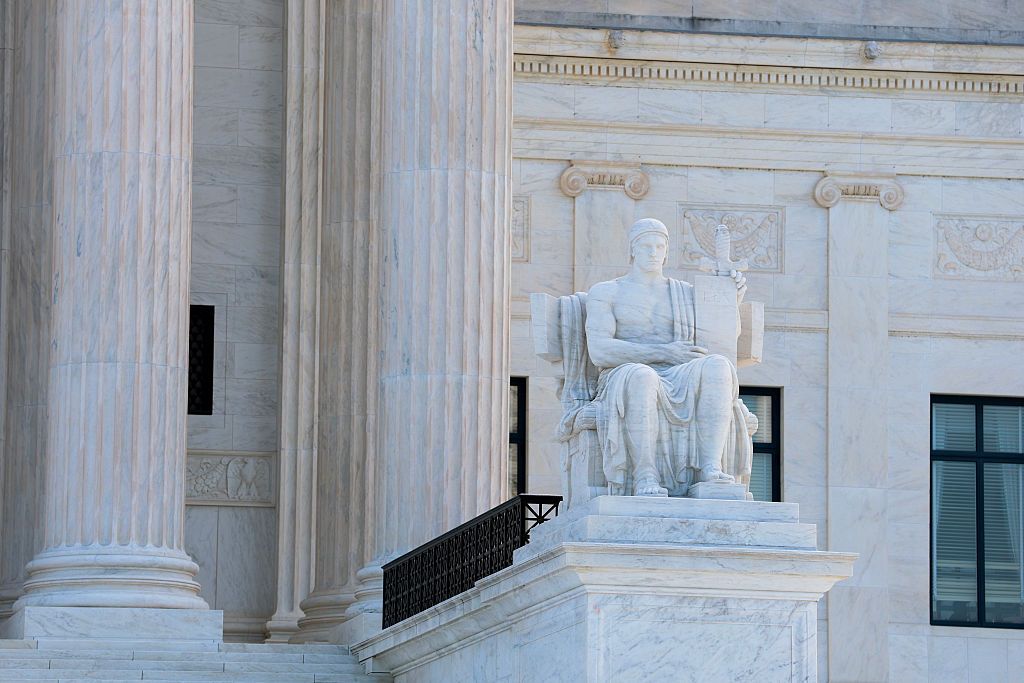
Missouri congressional redistricting battle goes to Supreme Court for the third time
Less than two weeks after the Supreme Court paused a ruling by a federal judge in Missouri that would have cleared the way for the state to use a new congressional map intended to give Republicans an additional seat in the U.S. House of Representatives in the November 2026 elections, the opponents of that map once again asked the justices to intervene in the dispute over the state’s congressional districts.
Court News
Missouri seeks to use congressional redistricting map expected to benefit Republicans
Missouri and a group of candidates and voters seeking to implement a new congressional map enacted in 2025 urged the Supreme Court on Wednesday afternoon to leave in place a ruling by a federal appeals court that directs the state to use that map. The filings came less than 18 hours after the new map’s opponents, who have already prevailed twice before the court, brought the Missouri redistricting dispute back to the interim docket.
Contributor Corner
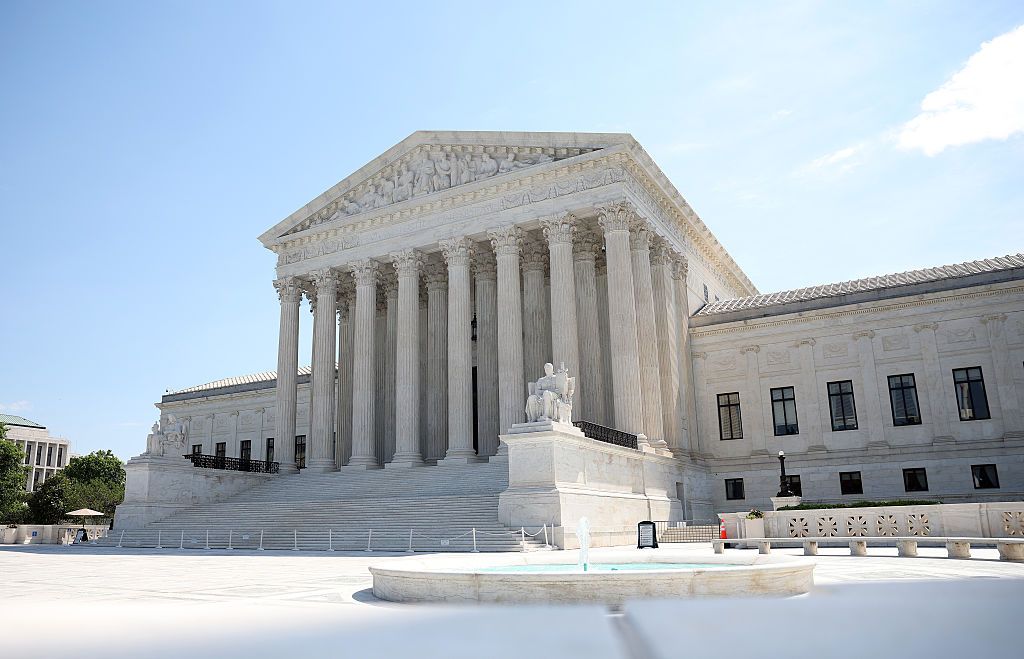
The decision before the decision
In her In the Interim column, Taraleigh Davis shared her research into the Supreme Court’s use of administrative stays – that is, stays that briefly freeze a “lower-court order to preserve the status quo” while the justices come to a decision. She explored how often the court deploys administrative stays and whether they “tell us anything about what comes next.”
Contributor Corner
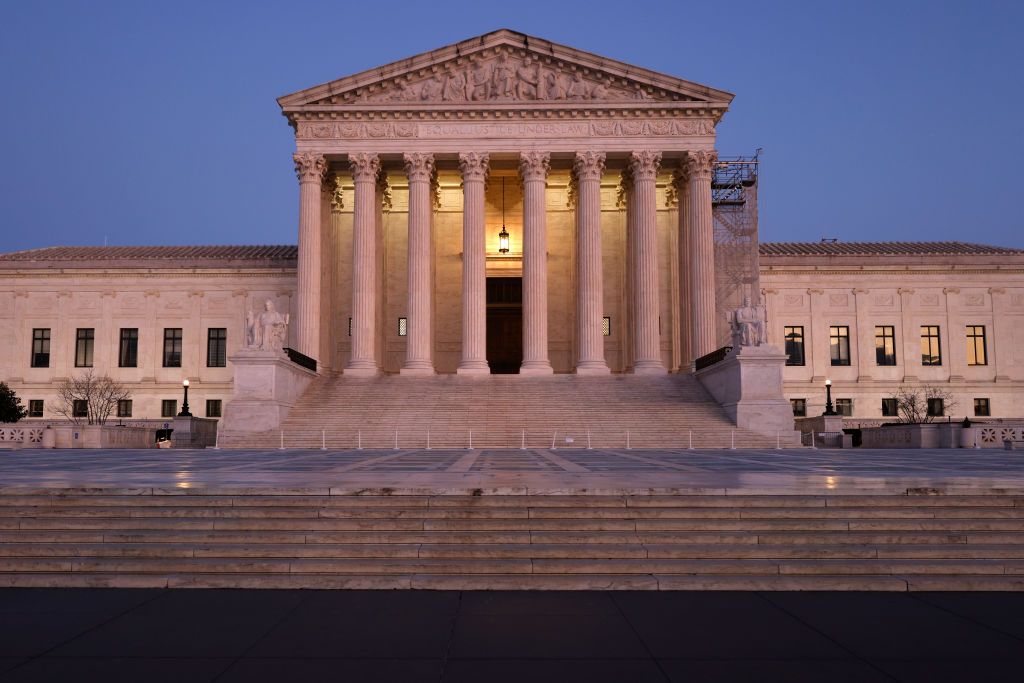
Respecting our multi-branch lawmaking process
In his Major Questions column, Chad Squitieri reflected on separation-of-powers issues that arise in the context of the federal lawmaking process and explained why he believes the Supreme Court too often acts as if Congress makes law alone. “Going forward,” Squitieri wrote, “the court should better account for the Constitution’s multi-branch lawmaking process by more regularly referencing both the Congress and the president when referring to the creation of federal statutes.”
A Closer Look
Teck Metals Ltd. v. Confederated Tribes of the Colville Reservation
For more than 125 years, a Canadian mining company has operated along the Columbia River in British Columbia, about 10 miles north of where the river crosses the border into the United States. Beginning in 1930, the company, now known as Teck Metals, released waste materials created during the mining process into the river, which washed them away toward Washington state.
In 2004, two members of the Confederated Tribes of the Colville Reservation, which is in Washington and bordered on two sides by the Upper Columbia River, sued the mining company under the Comprehensive Environmental Response, Compensation, and Liability Act, alleging that the waste materials were contaminating the river, harming fish and other organisms. Washington state joined the suit, agreeing with the tribe members that Teck should be held liable for the damage, and the tribes later joined, as well.
Through CERCLA suits, the federal government, states, and/or Indian tribes may recover cleanup costs from companies found to be responsible for hazardous waste sites. They may also seek financial damages “for injury to, destruction of, or loss of natural resources” – such as the cost of having to establish a new water supply or fees the government was unable to collect when a public recreation area was closed due to safety concerns.
The federal district court in Washington weighing the CERCLA claims against Teck Metals broke the dispute into three phases. In the first phase, it determined that the company was liable under CERCLA for the damage to the Columbia River. In the second phase, it addressed cleanup costs, ordering Teck to pay the tribes approximately $8.6 million. The third – and current – phase of the case focuses on financial damages. Together, the state and tribes asked for $177 million to address injuries to fish and “benthic organisms” in the river. Separately, the tribes asked for over $500 million in additional damages related to “their interim lost uses of the injured natural resources that are specific to their members because of their unique relationship with the Upper Columbia River,” emphasizing the role the river has long played in their cultural traditions and ceremonies.
Teck Metals challenged the tribes’ separate claims, contending that CERCLA does not cover damages stemming from a cultural connection to a natural resource. The district court agreed with the company, holding that “[t]he Tribes’ claims fell outside the statute’s scope.” But the U.S. Court of Appeals for the 9th Circuit reversed that decision, determining that claims for damages related to “interim lost uses of injured natural resources” are allowed under CERCLA, even if the claims have a cultural component.
In July, Teck Metals asked the Supreme Court to clarify the scope of CERCLA here, contending that the 9th Circuit’s decision “upended” the statute’s “careful tradeoff between broad liability and limited remedies,” allowing for novel damages claims with “no limiting principle.” CERCLA, according to the petition for review, does address the “use value” of a resource, but that phrase does not pave the way toward “a distinct category of subjective, nonuse injuries that reflect how a person feels about a resource.”
Teck Metals further argues that the 9th Circuit’s ruling deepened a disagreement between the federal courts of appeals, known as a circuit split, over CERCLA’s scope. “In the Tenth Circuit, recovery is restricted to accomplishing CERCLA’s core goals of restoring or replacing natural resources. In the D.C. Circuit, trustees may account for some nonuse values in seeking damages, but may not recover for purely private interests such as subjective individual perceptions of harm. And now in the Ninth Circuit, trustees may recover for the subjective, felt losses of a cultural connection to a resource,” the petition says.
In their response to Teck’s petition, the tribes assert that the 9th Circuit’s ruling was “uncontroversial[]” and in line “with decisions from other circuits holding that CERCLA compensates for all lost uses of damaged natural resources.” In fact, the tribes continue, there is no circuit split on the question presented, because “this is the first appellate case in which a defendant has attempted to carve compensation for cultural uses out of CERCLA.”
Moreover, according to the tribes, it does not make sense for the justices to take up the case at this point in the proceedings, when the 9th Circuit has “held only that CERCLA does not categorically bar recovery” of the tribes’ separate damages claims, but lower courts have not actually dug into those claims. “[I]t is premature to conclude that the Tribes here will even obtain such lost-use damages,” they write.
Teck Metals Ltd. v. Confederated Tribes of the Colville Reservation is scheduled to be considered by the justices at the “long conference” on Monday.
SCOTUS Quote
JUSTICE GORSUCH: “So you have a dog in the hunt on the scope of the discovery rule –”
MR. EARNHARDT: “Well –”
JUSTICE GORSUCH: “– but not on whether there is a discovery rule?”
MR. EARNHARDT: “Well, no, I –”
JUSTICE GORSUCH: “Is that what you’re saying?”
MR. EARNHARDT: “No, I’m saying –”
JUSTICE GORSUCH: “What is this dog?”
— Warner Chappell Music, Inc. v. Nealy (2024)